

UTP - Automated Professor Attestation
Digital professor attestation and student feedback via kazva.bg.
The Challenge
Professor attestation was conducted on paper - students fill out forms, a committee processes them manually, results are summarized in Excel.
Results arrived months after the semester ended. Student participation was low, and the procedure was perceived as a formality.
The Solution
A QR code linked to kazva.bg for each professor. Students scan and rate anonymously in seconds - no app, no registration.
The system generates a personal report for each professor - by criteria, by semester, compared to faculty averages. Leadership sees results across all departments.
Results
The paper process was replaced with digital. The attestation cycle that took weeks of manual work now happens automatically.
The project attracted the attention of BTA, which covered the deployment at a dedicated press conference. The model is already being discussed for adoption at other universities.
How It Works
From QR code to professor report
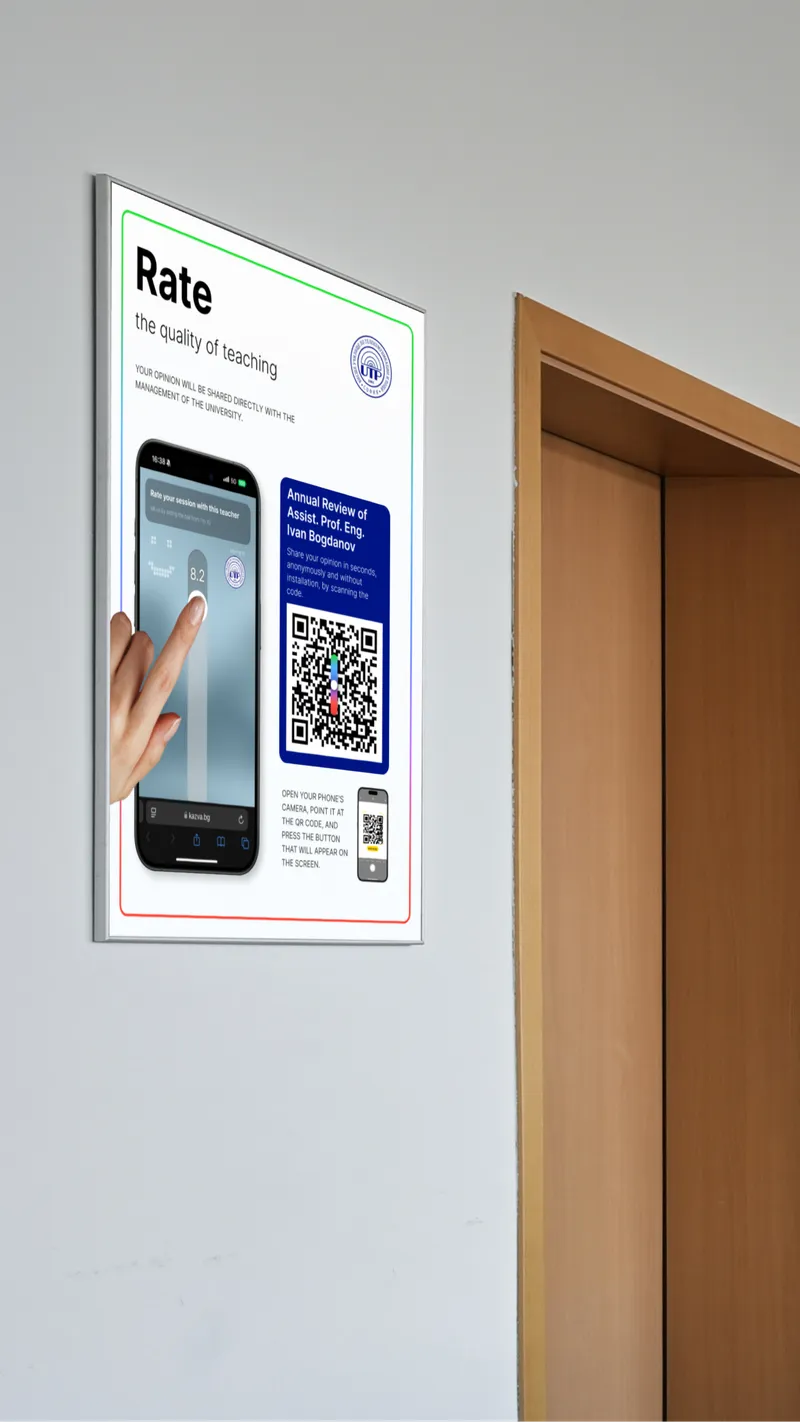
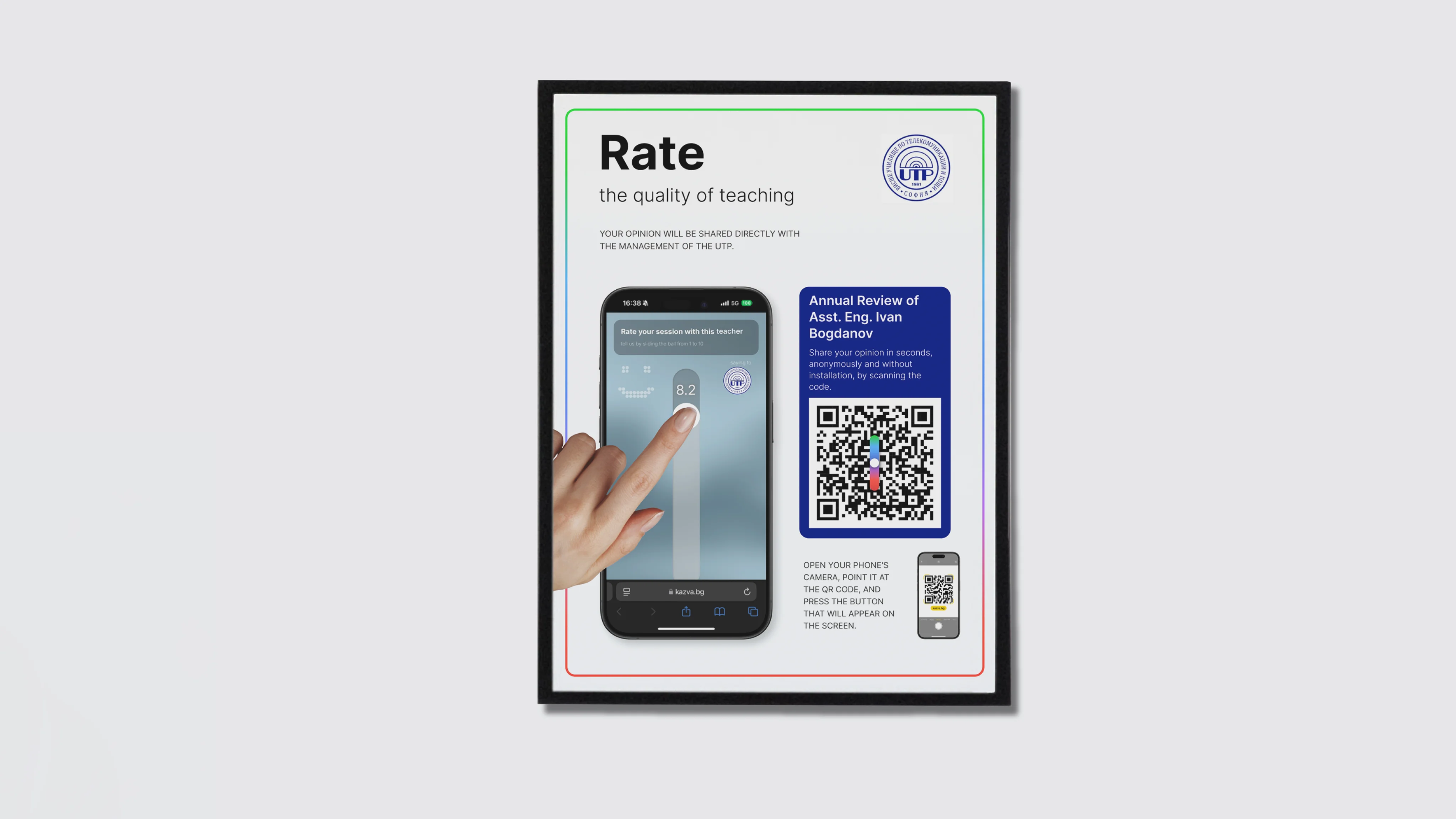
QR code on the wall
A poster with a QR code at the university
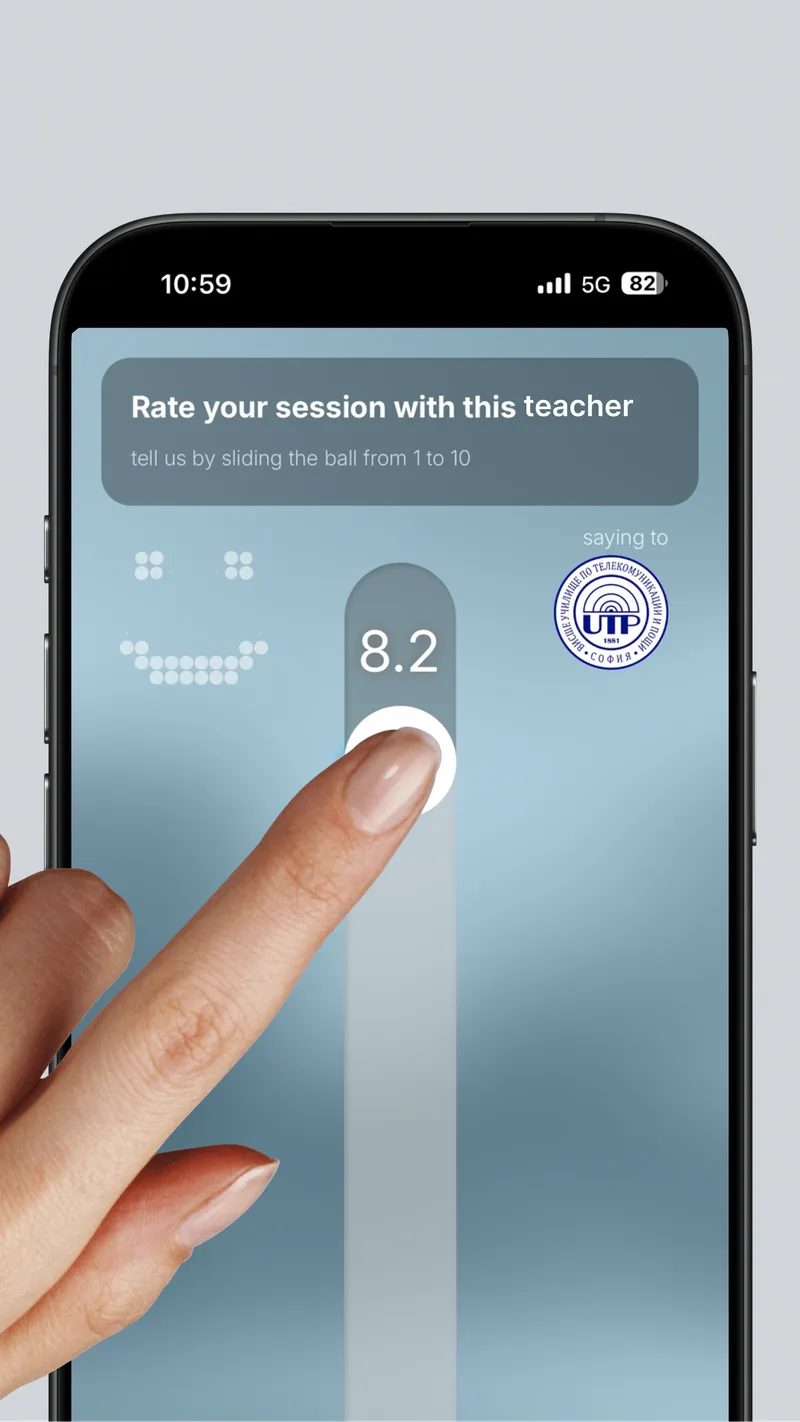
Rates the class
On a scale of 1-10, anonymously, in 30 seconds
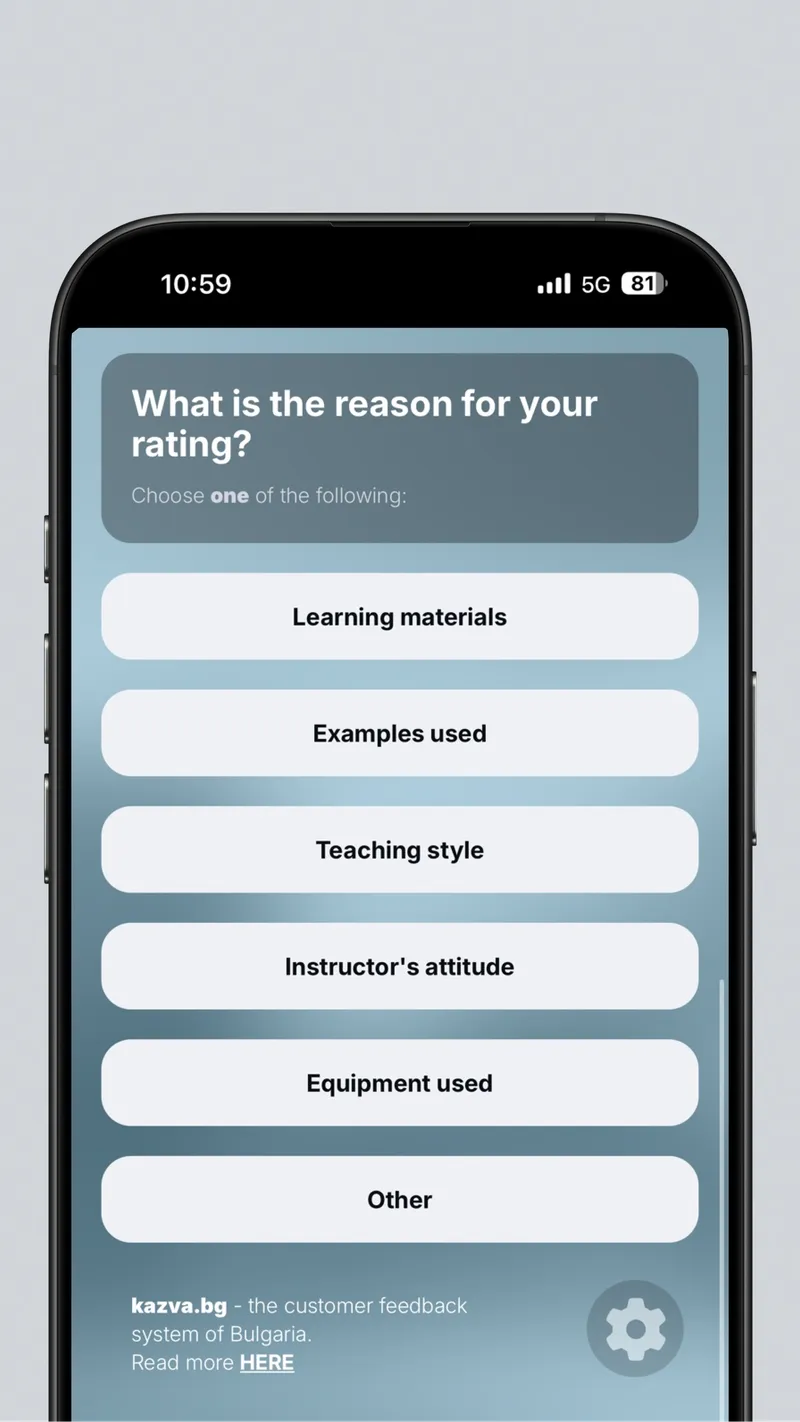
Gives a reason
Selects what the rating is based on
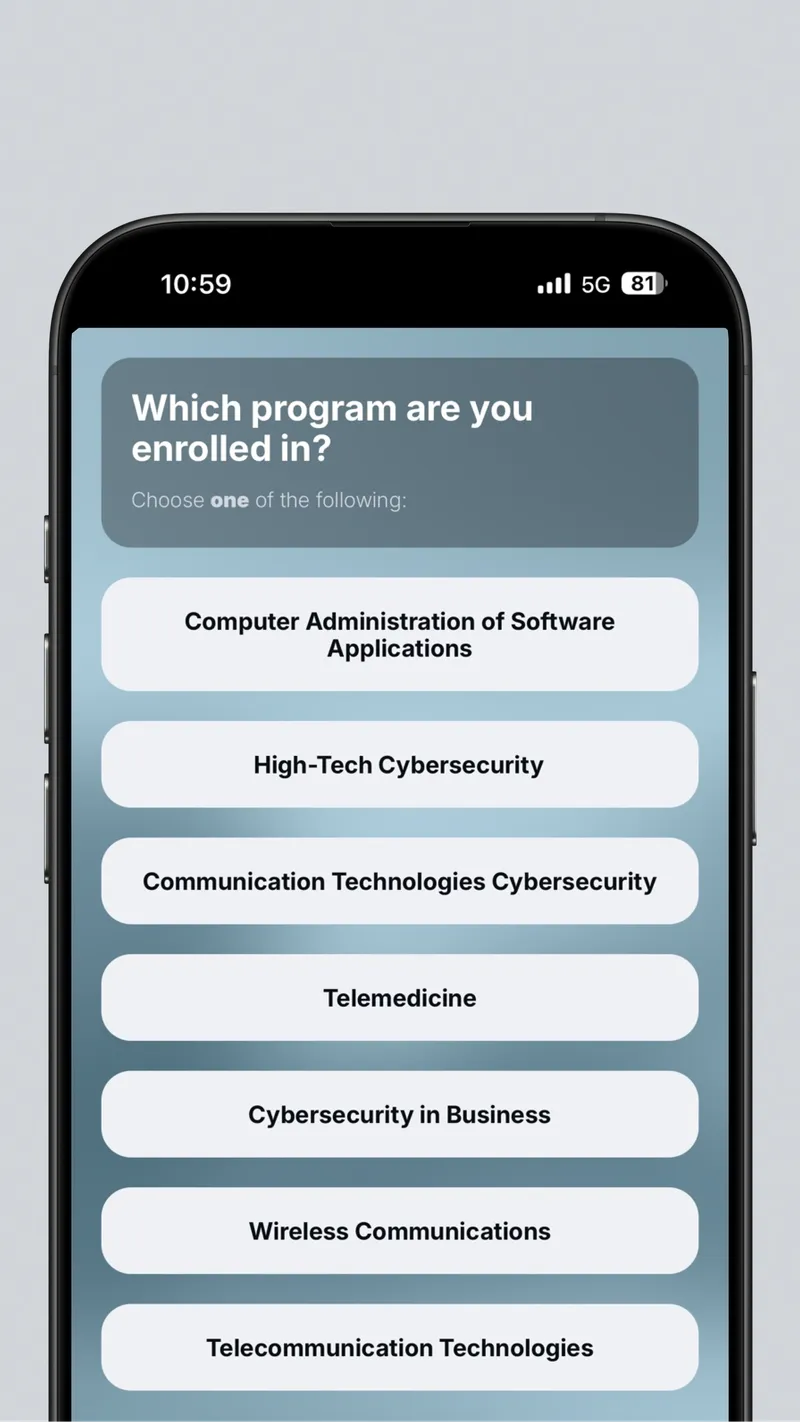
Selects major
Selects their major from the list
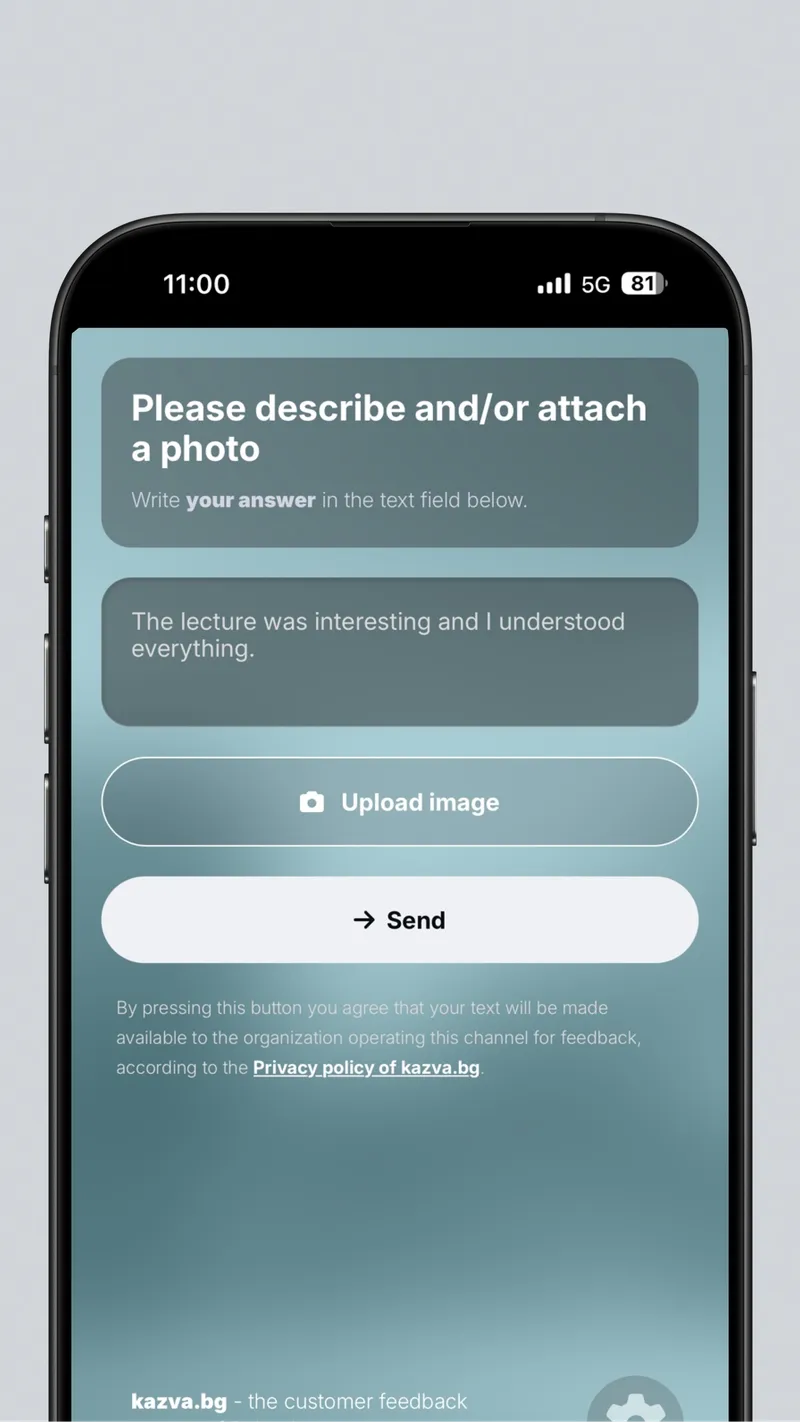
Leaves a comment
Adds a comment, compliment, or suggestion for the professor
Try it yourself
This is exactly what the student sees when scanning the QR code. It takes seconds - no app, completely anonymous.
- In seconds

- Anonymous
- No install
National Conference "Innovative Education and the Professions of the Future"
What You Get
Digital attestation without paper or manual processing
QR code per professor
Students scan and rate after the class - while the impression is fresh.
Report per professor
Scores by criteria, by semester, compared to faculty.
Moodle integration
Connects with the university's existing system.
Full anonymity
No registration, no app - students answer honestly.
Zero manual work
No paper, no Excel, no processing committee.
Leadership dashboard
Results by department, professor, and period at a glance.
Transformation
Before kazva.bg
- ✕ Paper forms distributed manually
- ✕ Weeks of manual processing in Excel
- ✕ Results ready months after the semester ended
- ✕ Low participation - students saw no point
- ✕ The procedure was perceived as a formality
With kazva.bg
- ✓ QR code per professor - rating in seconds
- ✓ Automatic processing - no paper, no Excel
- ✓ Real-time results
- ✓ Anonymity increases participation
- ✓ Personal reports with Moodle integration
The Student's Journey
How a rating improves teaching
The lecture ends
The student sees a QR code labeled "Rate the teaching".
The student scans and rates
Scans with their phone and rates in seconds. Anonymous, no registration.
Data is processed automatically
The system aggregates ratings by professor, course, and criteria.
The professor receives a report
A personal report with scores by criteria and semester trends.
Result
A formality becomes a tool for improvement. The student knows their opinion matters.
Digital attestation for any university
The UTP model is applicable to any university. No paper, no manual processing, no delays.
Book a Meeting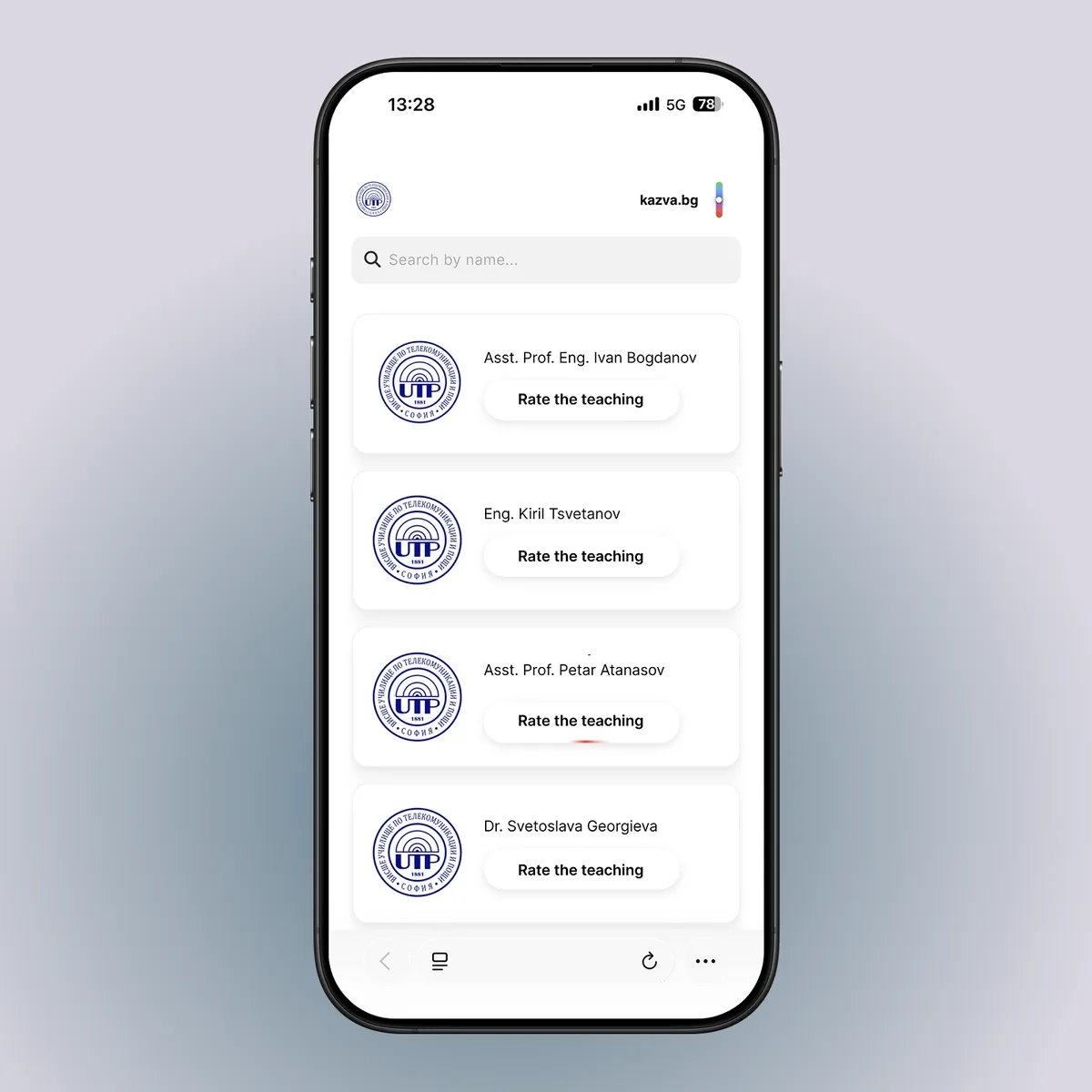
Implementation
Three steps to launch
Setup
Defining evaluation criteria and adapting questionnaires. Moodle integration.
Preparation
Placing QR codes at the university. Testing the system.
Launch
Students start rating. Professors receive their first reports.
Approach Comparison
Swipe for more
| kazva.bg | Paper forms | |
|---|---|---|
| Processing | Automatic, real-time | Manual, weeks |
| Anonymity | Full | Partial |
| Moodle integration | Yes | No |
More case studies
All 4 airports in Bulgaria - on one platform
Passenger feedback from 4 national airports. Real-time notifications on low ratings.
HR / Employee ExperienceEmployee feedback - every day, not once a year
QR code at the workplace. Anonymous rating in 30 seconds. HR sees results immediately.
Finance / HRBORICA - 29 offices, one platform
29 offices, one dashboard. Customer ratings by location and period.
Ready to automate assessments?
See how QR codes and real-time dashboards replace manual processes.
Book a Meeting